What's Included in a Full-Service Landscaping Package?
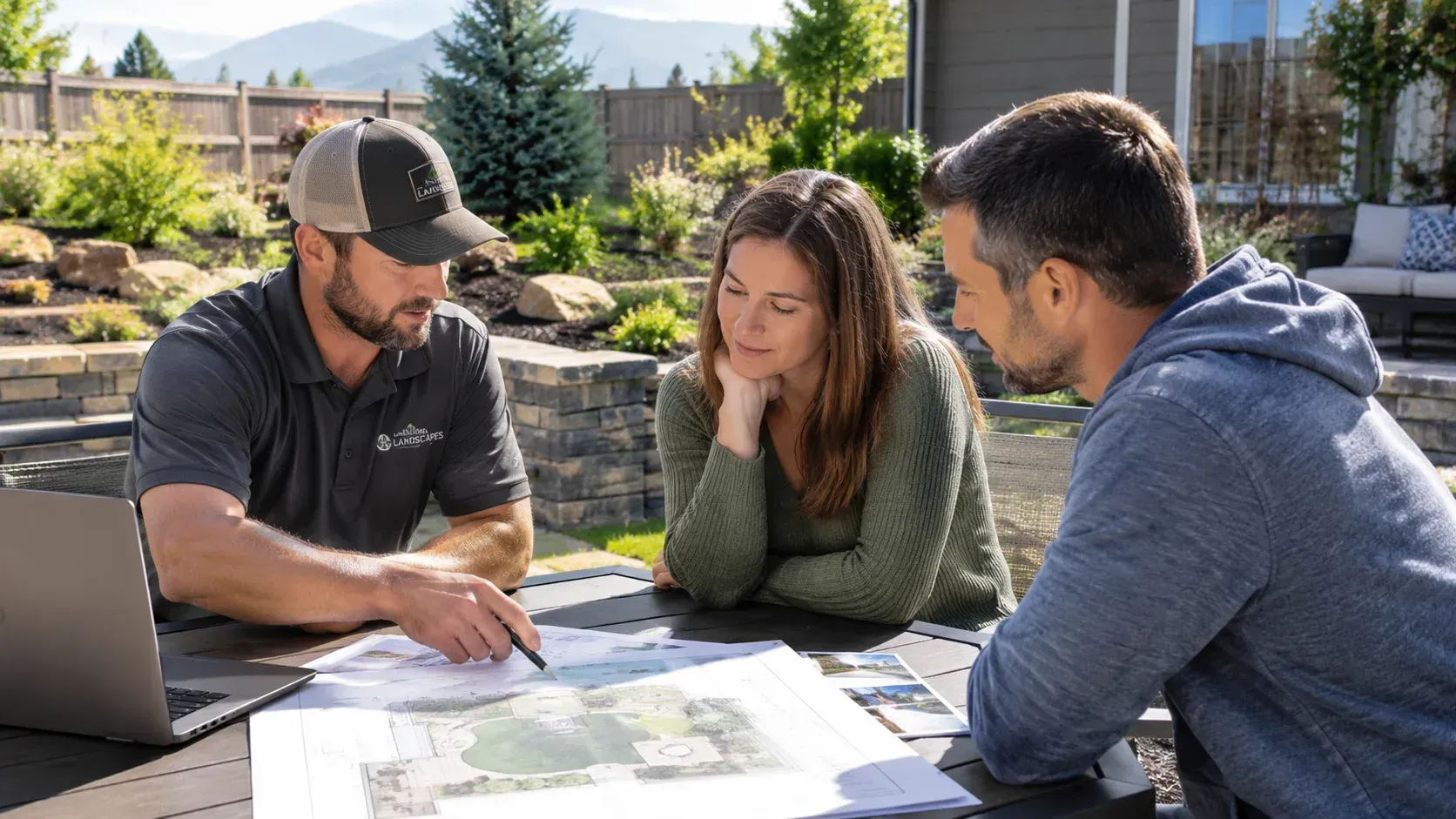
Table of Contents
- Introduction
- What a Full-Service Landscaping Package Actually Covers
- Design and Planning: Where a Full-Service Package Starts
- Site Work, Soil and Grading
- Planting, Beds and Lawn Work
- Hardscaping Inside a Full-Service Landscaping Package
- Irrigation, Drainage and Lighting
- Ongoing Landscape Maintenance and Seasonal Work
- What Is Usually Not Included in a Landscaping Package
- Full-Service vs. Hiring Separate Contractors
- How a Phased Full-Service Project Works
- Conclusion
- Get a Free Estimate for Your Property
- Frequently Asked Questions
Key Takeaways
- A full-service landscaping package means one crew handles the whole sequence, from design through installation to ongoing maintenance, rather than you coordinating separate trades.
- The parts that matter most are the ones you cannot see later: soil assessment, grading and drainage. Getting those wrong makes everything planted on top of them fail.
- Design comes first in a real full-service package. Installing before planning is how yards end up with plants in the wrong light and patios in the wrong place.
- Hardscaping, irrigation concepts and lighting layouts belong in the same plan as the planting, because they all compete for the same space.
- Full service does not have to mean all at once. A phased build spreads cost across seasons while keeping one plan and one crew.
Introduction
A full-service landscaping package covers the entire arc of a yard project under one crew: design and planning, site preparation and soil work, grading and drainage, planting and lawn installation, hardscape features like patios and walkways, irrigation and lighting layouts, and ongoing seasonal maintenance afterward. The word "full-service" is doing real work in that sentence. It means you are hiring one company to own the outcome rather than assembling the pieces yourself.
We have been landscaping in the Bitterroot Valley for over 25 years, and our landscaping is structured around a simple three-step approach: property evaluation, customized planning, then professional installation. What follows is what each stage of a full-service package actually includes, and just as importantly, what it usually does not.
What a Full-Service Landscaping Package Actually Covers
Here is the whole scope in one place, before we go through it piece by piece:
- Design and planning. A plan for the layout, flow and features of the space before any work begins.
- Property evaluation. Assessing sun exposure, drainage patterns, soil and existing vegetation.
- Soil assessment and improvement. Addressing compaction and nutrient problems rather than planting into whatever is there.
- Grading and site preparation, so water moves away from your house rather than toward it.
- Planting. Plant bed installation, trees, shrubs and perennials selected and arranged for colour and texture.
- Lawn work. Lawn renovation, turf improvements, reseeding, or full lawn replacement.
- Hardscaping. Patios, walkways, retaining walls, fire pits, borders and stone features.
- Irrigation and drainage concepts, planned alongside everything else rather than retrofitted.
- Outdoor lighting layouts.
- Mulching and edging, which is what makes new beds read as finished.
- Cleanup and haul-away when the work is done.
- Ongoing maintenance, including seasonal refreshes and property cleanups.
Not every project needs every item. A full-service company should be willing to tell you which ones yours does not.
Design and Planning: Where a Full-Service Package Starts
The distinction between a package that starts with design and one that starts with a crew showing up is the single biggest quality difference in this industry.
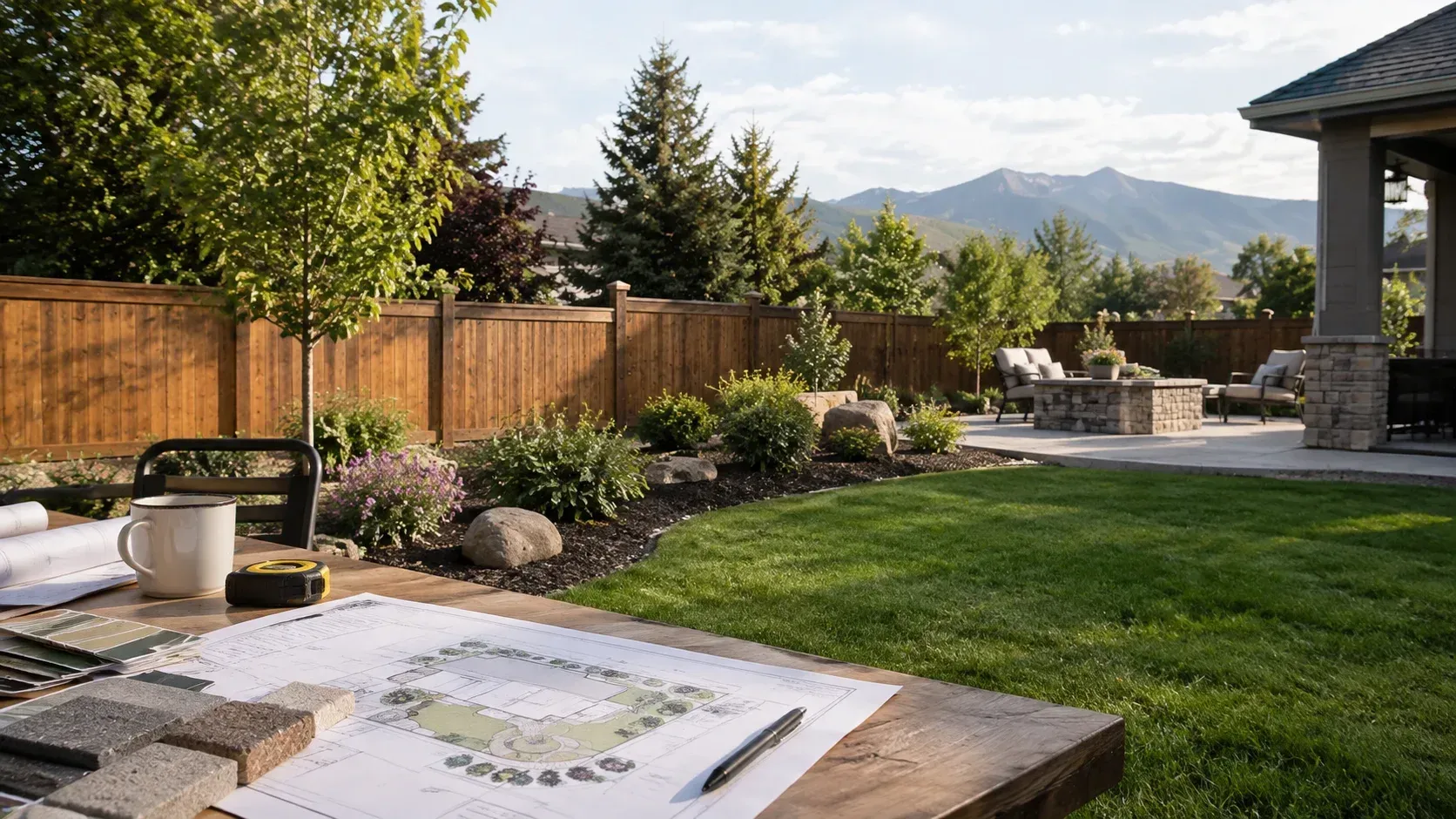
Design means planning the layout, flow and features of your outdoor space before a single shovel hits the ground. In our design process that runs in three stages: a conversation about how you actually want to use the space, a site analysis of existing conditions including sun exposure, drainage, soil and vegetation, then a plan we walk you through and adjust until it is right. We offer full 3D landscape design planning, so you can see the finished yard before anything is built, and the process includes revisions.
What a design covers is broader than most people expect. It is not a plant list. It runs from planting zones and grading to patio placement, water features, irrigation concepts and outdoor lighting layouts, because all of those things compete for the same square footage and the same sightlines. Decide them separately and they fight each other.
If the difference between design and installation is still fuzzy, that distinction is worth understanding properly before you hire anyone, and it is the subject of its own article on landscaping versus landscape design.
Site Work, Soil and Grading
This is the least glamorous part of a full-service package and the part that determines whether the rest of it survives.
- Soil assessment. We assess soil conditions and address problem areas, including compaction and nutrient deficiency. Plants put into compacted, depleted soil do not establish, and no amount of watering fixes it.
- Soil improvement. Amending and preparing beds so root systems can actually develop.
- Grading. Shaping the ground so water runs away from your foundation, your patio and your beds. Bad grading is the root cause of a large share of the drainage complaints we get called about.
- Drainage correction. Addressing the low spots, the runoff paths and the places snowmelt collects.
- Removal and clearing. Taking out failed plantings, old beds, stumps and debris.
- Problem-area work. Slopes, erosion, bare patches and areas where nothing has ever grown well.
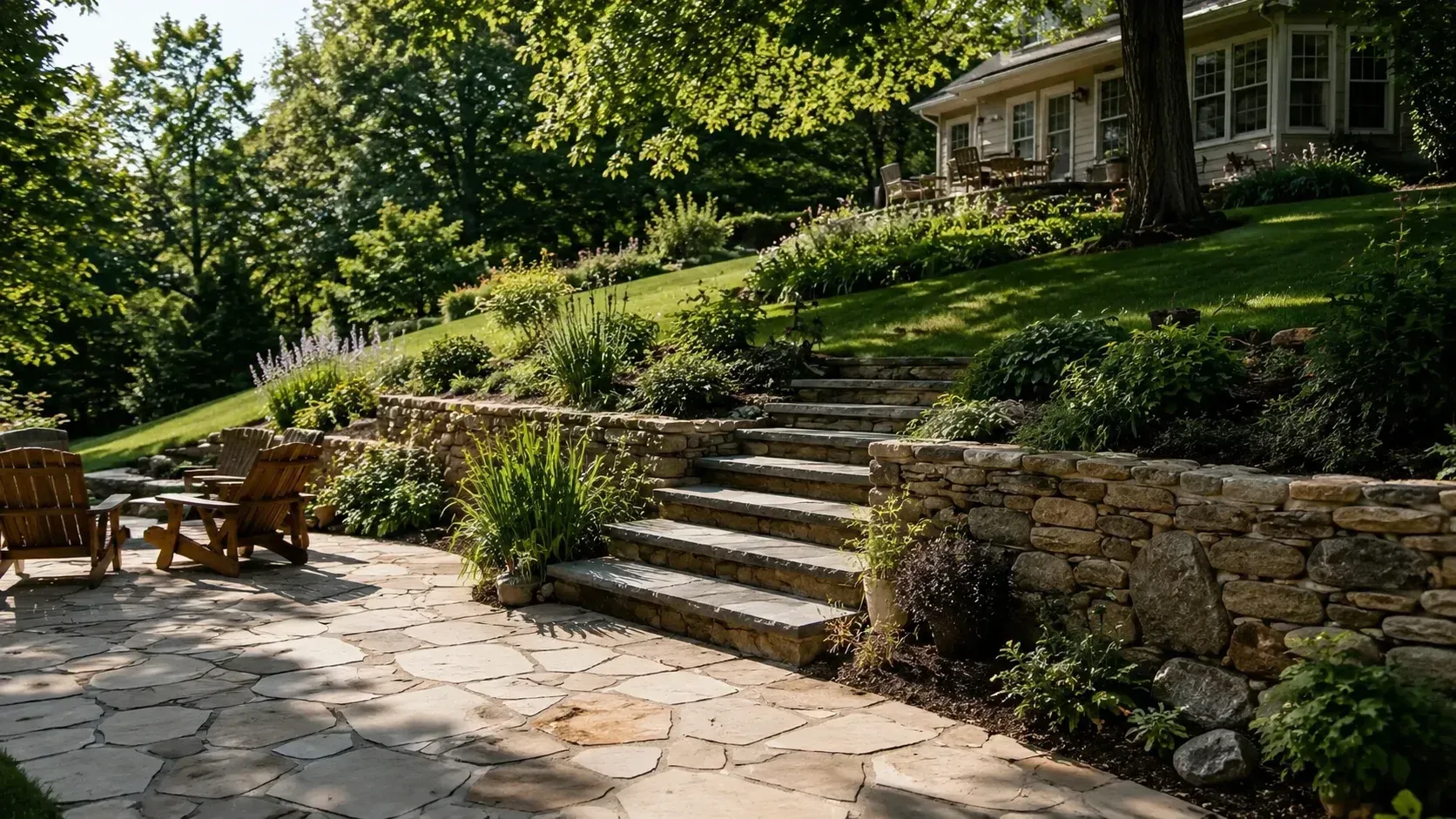
Slopes deserve particular attention here, because the Bitterroot has a lot of them and they change the whole approach to a yard. We have written separately about designing landscaping around a sloped property if that describes yours.
Planting, Beds and Lawn Work
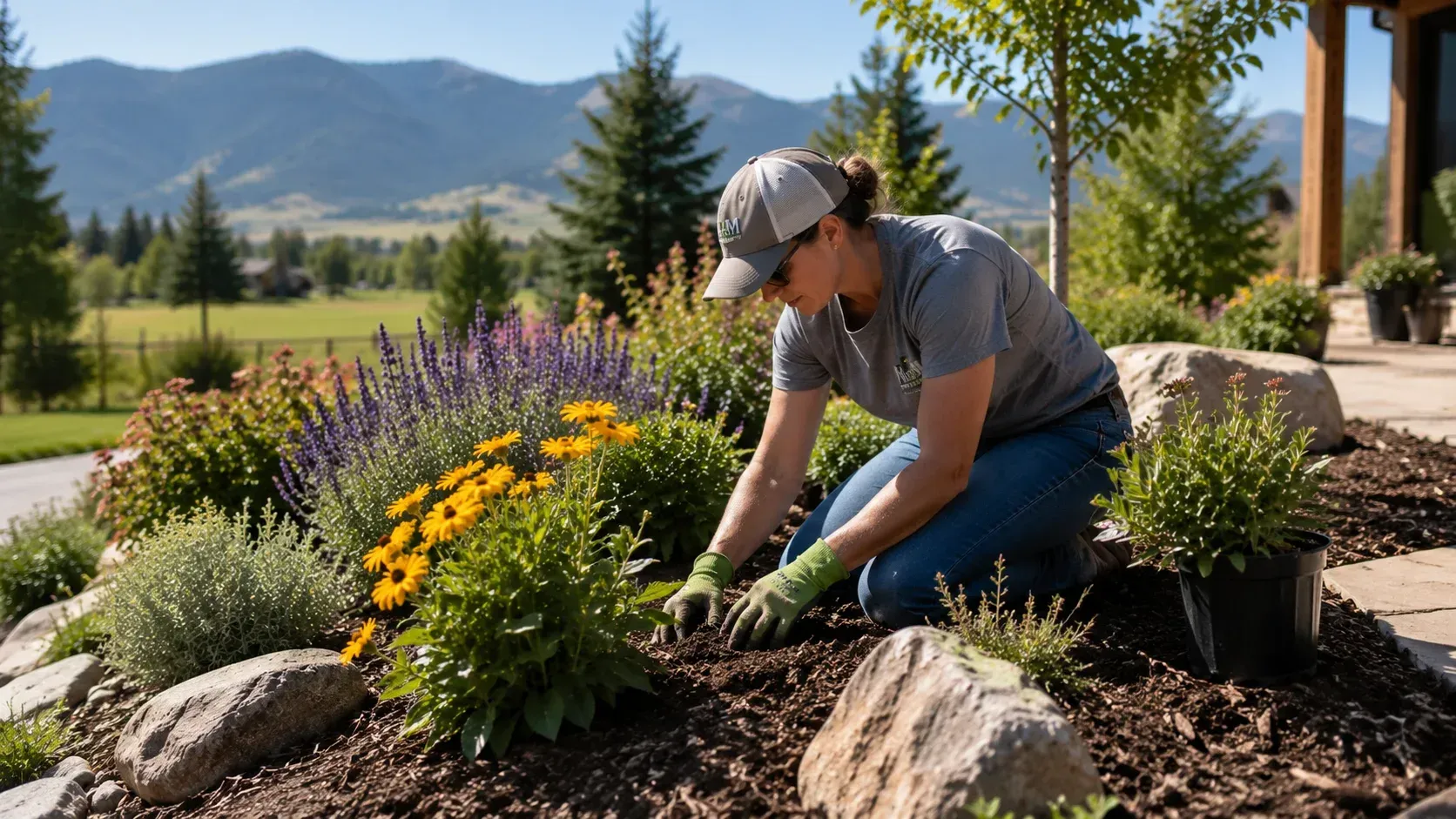
Once the ground is right, the planting goes in. In a full-service package this typically includes:
- Plant bed installation, laid out and shaped according to the design
- Plant selection and arrangement, chosen to provide colour and texture across seasons rather than only looking good in June
- Trees and shrubs, positioned for mature size rather than the size they are on delivery day
- Perennials and ornamental grasses
- Lawn renovation and turf improvements where the existing lawn is salvageable
- Reseeding or full lawn replacement where it is not
- Mulching and edging, which suppress weeds, hold moisture and give beds a defined line
- Seasonal refreshes, swapping in seasonal colour where you want it
Plant selection is where local knowledge earns its keep. The valley's climate, altitude and dry summers rule out plenty of things that thrive elsewhere, and a design that ignores that produces a yard you fight with every year. Our guide to plants that thrive in Bitterroot Valley gardens goes through what actually holds up here.
Hardscaping Inside a Full-Service Landscaping Package
Hardscaping is the structural, non-plant half of a yard, and in a full-service package it gets planned in the same drawing as the planting rather than added later.
What it covers:
- Patios and outdoor seating areas
- Walkways and pathways
- Retaining walls
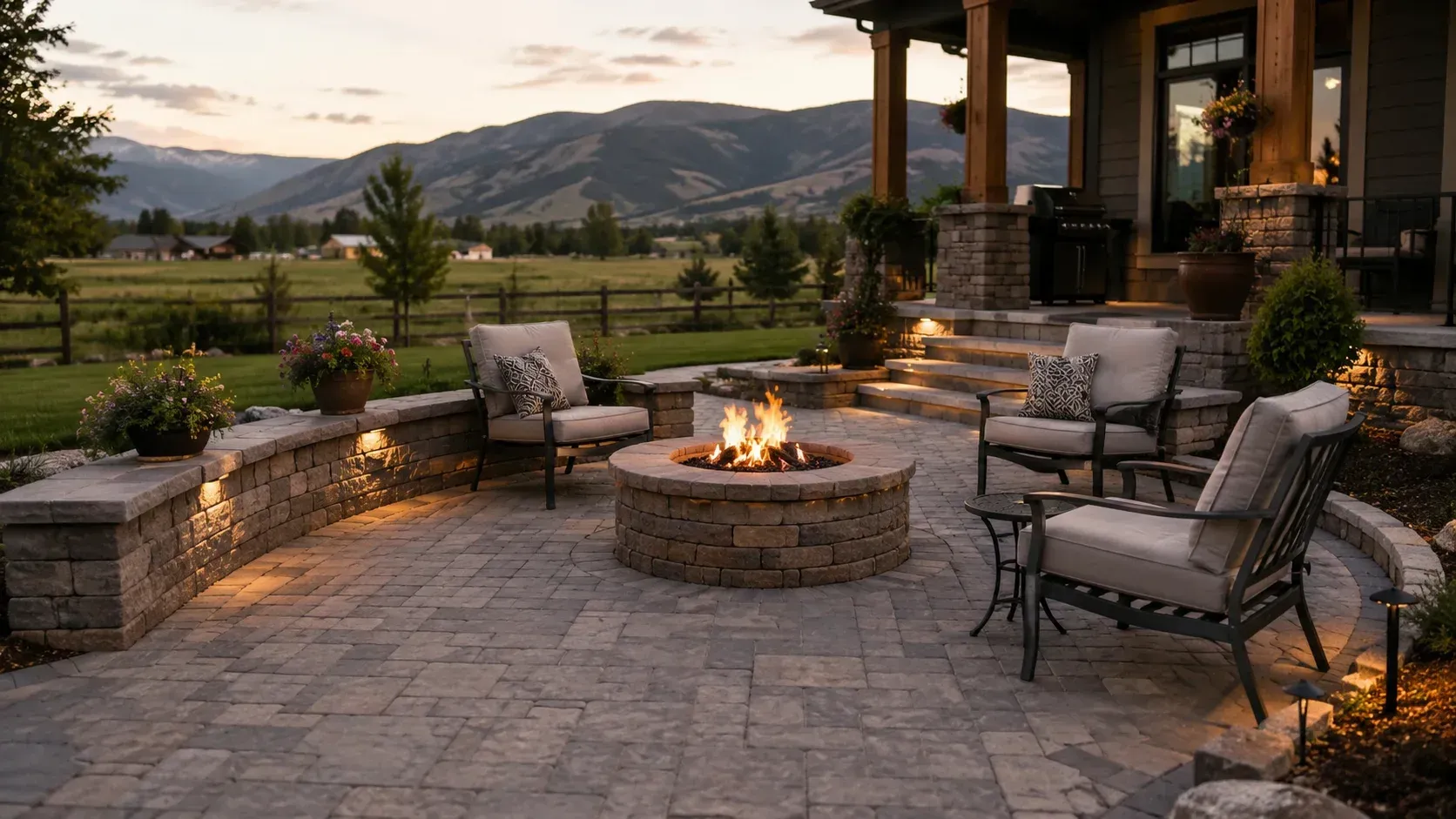
- Fire pits and gathering spaces
- Landscape borders and stone features
Before a single stone gets set, we evaluate the property's slope, layout and how you actually use the space, because a patio in the wrong place is an expensive thing to move. Our view is that custom hardscaping should look as good five years from now as it does on day one, which comes down to base preparation and drainage more than the surface material.
If a patio is the centrepiece of what you are considering, we have looked at whether a paver patio is worth the investment in more detail. You can also see finished hardscape work in our gallery, and the full scope of what we build on our hardscaping page.
Irrigation, Drainage and Lighting
These three get grouped together because they share one trait: they are far cheaper to install while the ground is already open.
Irrigation concepts belong in the design phase, since where the water goes depends on where the plants go and how the ground slopes. Retrofitting irrigation into finished beds and established lawn means cutting into work you just paid for.
The same is true of outdoor lighting layouts. Running low-voltage lighting alongside other installation work is straightforward. Adding it two years later means trenching through planted beds.
Drainage is the one to get right the first time regardless of budget. Water that is not managed will find your foundation, your patio base or your lowest bed, and it will keep doing it every spring.
A useful rule when you are deciding what to cut from a project: cut things that sit on top of the ground, not things that go into it.
Ongoing Landscape Maintenance and Seasonal Work
A genuinely full-service package does not end at installation. Maintenance is what keeps a new landscape looking like the design for more than one season, and we offer ongoing maintenance support after the install.
Typical ongoing work includes:
- Seasonal landscape refreshes
- Property cleanups, spring and fall
- Lawn edging and mulching maintenance
- Bed weeding and plant health monitoring
- Pruning as plants mature
- Seasonal irrigation startup and shutdown
- Winter preparation
The first two years after installation matter most, because that is when new plantings establish. A landscape that gets attention through that window looks substantially better at year five than one left to fend for itself.
What Is Usually Not Included in a Landscaping Package
We would rather be straight about the boundaries than have you assume something is covered:
- Permitted structural work. Larger retaining walls, decks and structures may require permits and engineering, and that is a separate track.
- Licensed electrical or plumbing. Line-voltage electrical and plumbing connections are separate licensed trades.
- Tree removal of large or hazardous trees, which is specialist work.
- Fencing, usually a separate scope.
- Pools and spas.
- Snow removal, unless contracted separately.
- Repairs to existing irrigation or drainage that were not part of the plan, though we will tell you what we find.
- Plant replacement outside any stated guarantee. Ask specifically about what happens if a plant dies, because policies vary across companies.
That last one is worth asking any landscaper directly before you sign.
Full-Service vs. Hiring Separate Contractors
Both approaches are legitimate. Here is the honest comparison.
| Full-service package | Separate contractors | |
|---|---|---|
| Who coordinates | The landscaper | You |
| Sequencing risk | Held by one company | Falls on you |
| One plan for the whole yard | Yes | Only if you enforce it |
| Accountability when something fails | One party | Disputed between trades |
| Ability to shop each piece on price | Limited | Full |
| Best for | Whole-yard projects, phased builds | Single, self-contained jobs |
The sequencing point is the practical one. Landscaping has a required order: grading before planting, hardscape base before pavers, irrigation before turf. When separate contractors each control their own schedule, that order is the thing that breaks, and the cost of redoing work usually exceeds whatever you saved by bidding each piece.
If your project is one contained job, such as a single walkway, hiring that trade directly is perfectly sensible. Full service earns its value on whole-yard work.
How a Phased Full-Service Project Works
Full service does not have to mean everything in one season, and for a lot of properties it should not.
We offer phased implementation over time, which means the design covers the whole yard while the installation happens in stages you choose. A typical sequence puts the structural and invisible work first, because everything else depends on it: grading, drainage and hardscape base in the first phase, then primary planting and lawn, then refinements like lighting, seasonal colour and secondary beds.
The advantage over simply doing less is that phase three still fits phase one. When each year's work is planned independently, you end up undoing things.
Conclusion
A full-service landscaping package means design, site and soil work, grading and drainage, planting and lawn, hardscaping, irrigation and lighting, cleanup, and ongoing maintenance, delivered by one crew working from one plan.
The parts worth protecting in your budget are the ones that go into the ground rather than on top of it. Soil, grading and drainage decide whether the visible work lasts, and they are the hardest things to fix once a yard is finished. Everything above them can be phased.
Get a Free Estimate for Your Property
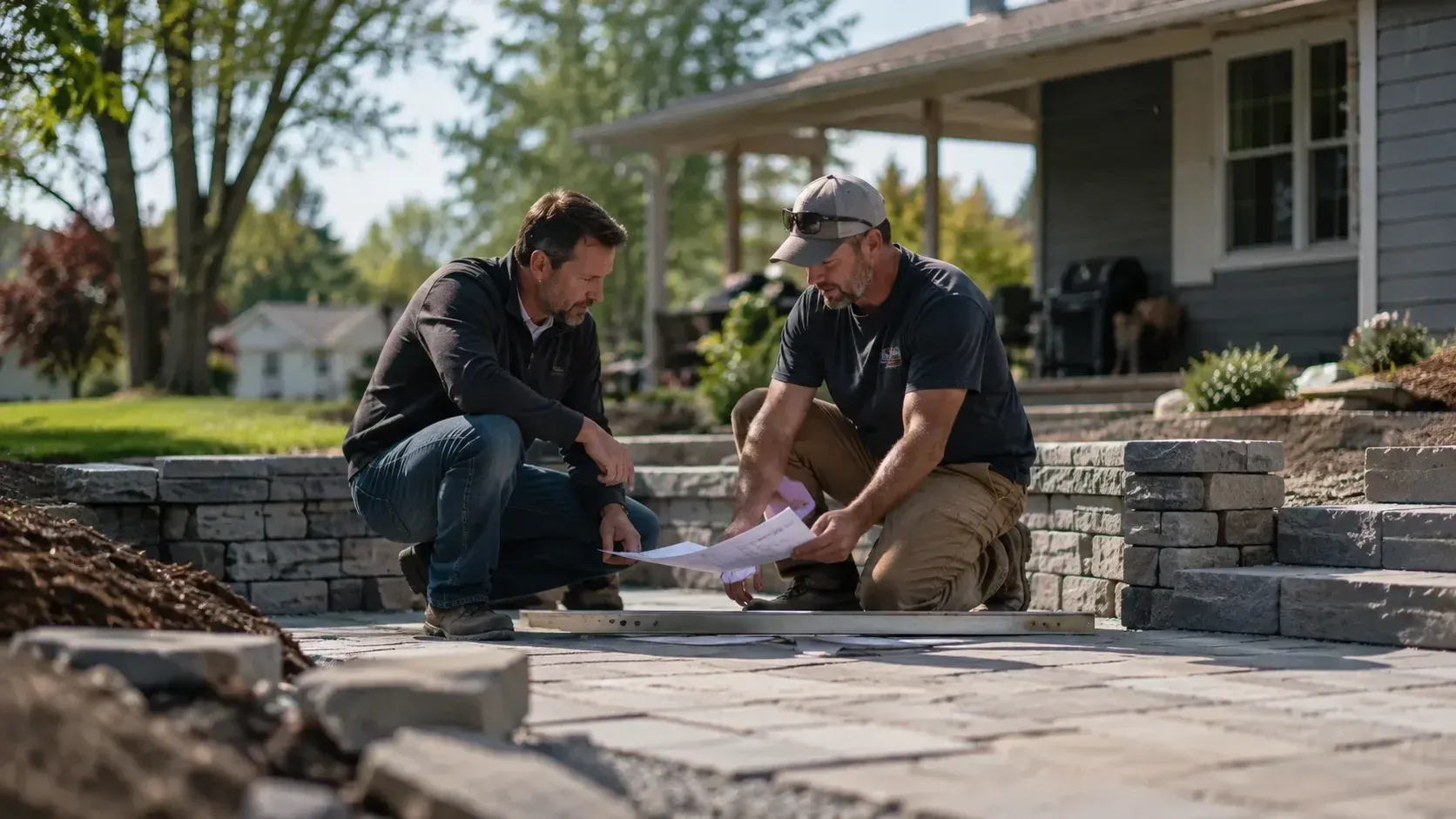
If you are weighing a full-service landscaping project, the useful next step is a walk of the property. Grade, soil, drainage, sun exposure and how you actually use the space all change the recommendation, and none of it is visible from a photo.
Legacy Landscapes has been working in the Bitterroot Valley for more than 25 years, and we offer personalized design consultations and free estimates. We will give you a straight scope for your property, including telling you which parts of a full package yours does not need.
We serve Hamilton, Corvallis, Victor, Darby and Stevensville across the Bitterroot Valley. Call
(406) 540-0117 or reach us through the contact page, and see finished projects in our gallery.
Frequently Asked Questions
Does a full-service landscaping package include design?
It should. Design is what makes the rest coherent, since planting zones, patio placement, grading, irrigation and lighting all compete for the same space. If a company proposes installation without a plan, ask why.
Can I get a full-service package for just part of my yard?
Yes. A full-service company can scope a single area, and it is often smarter to do one zone properly than the whole property thinly. Have the design cover the whole yard even if the installation does not, so later phases still fit.
How is a landscaping package different from lawn care?
Lawn care is recurring maintenance of what already exists, such as mowing, edging and fertilizing. A landscaping package designs and installs the landscape itself, then maintains it. Many companies offer both, but they are different scopes with different pricing.
Do I have to do everything at once?
No. Phased implementation spreads the work across seasons while keeping one plan and one crew. The usual approach puts grading, drainage and hardscape base first, since later phases depend on them.
What happens if a plant dies after installation?
That depends on the company's plant guarantee, and policies vary widely across the industry. Ask specifically what is covered, for how long, and what is excluded before you sign anything.
Recent Posts