What Should You Look for When Hiring a Hardscaping Contractor in Corvallis, MT?
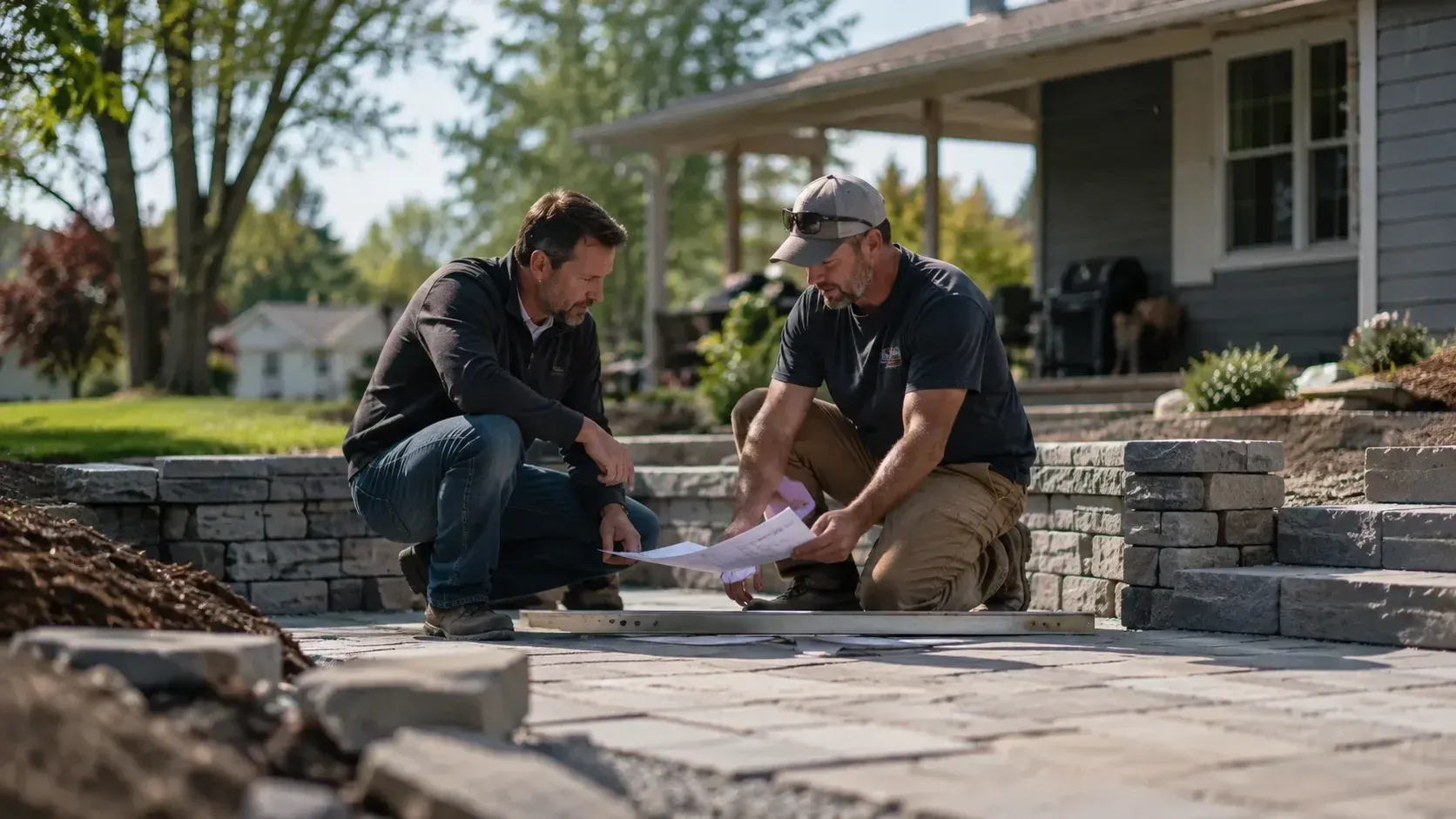
Table of Contents
- Introduction
- What a Hardscaping Contractor Actually Does
- The Core Qualifications to Check First
- Why Local Experience Matters in the Bitterroot Valley
- A Practical Framework for Comparing Contractors
- Questions Worth Asking Before You Sign
- Reading the Estimate and Contract
- Warning Signs to Take Seriously
- Common Misunderstandings About Hiring
- What Typical Online Advice Overlooks
- Conclusion
- Frequently Asked Questions
Key Takeaways
- The strongest hardscaping contractors combine proper licensing and insurance with local experience and a clear, written contract.
- Local knowledge matters in Corvallis because freeze and thaw cycles, drainage, and soil conditions directly affect how hardscape holds up.
- A detailed written estimate that spells out materials, base preparation, and drainage is one of the best signals of a serious contractor.
- The lowest bid is not always the best value, since cut corners on the base and drainage often cause the most expensive failures later.
- Checking references, verifying insurance, and asking specific questions upfront reduce the risk of problems during and after the project.
Introduction
When hiring a hardscaping contractor in Corvallis, MT, the most important things to look for are proper licensing and insurance, verifiable local experience, a detailed written contract, and clear knowledge of drainage and soil conditions in the Bitterroot Valley. These four factors matter more than a low price, because they protect both the quality of the work and your financial risk. Before you request quotes, it helps to understand what quality hardscaping work involves so you can tell a thorough contractor apart from one who cuts corners.
This decision matters because hardscaping is a long-term, structural investment. Patios, retaining walls, and walkways are meant to last for decades, and mistakes in the base or drainage are difficult and costly to fix once the surface is in place. Knowing what to evaluate before you sign a contract puts you in a much stronger position to choose well.
What a Hardscaping Contractor Actually Does
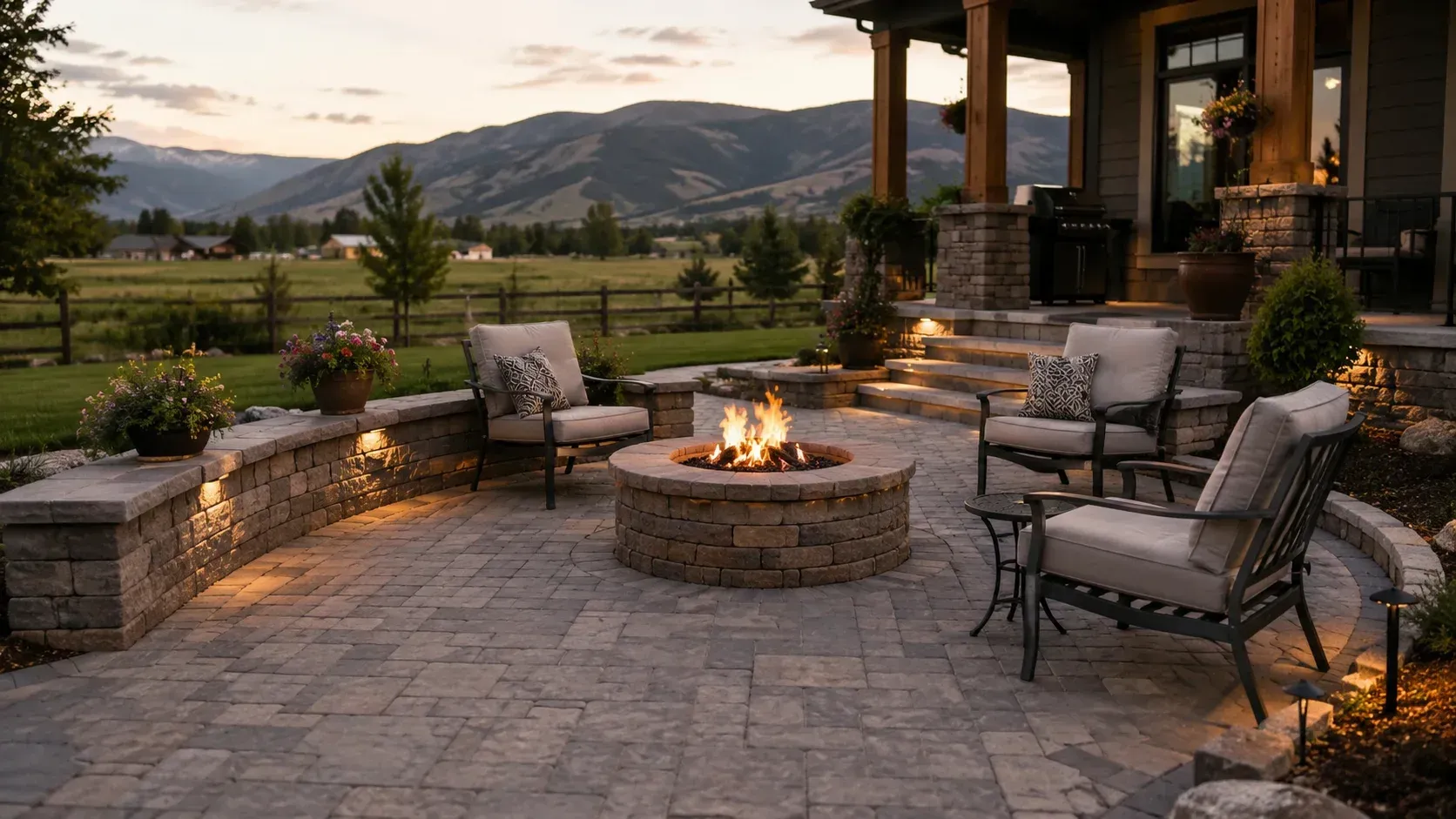
Direct answer: A hardscaping contractor designs and builds the non-living, structural parts of a landscape, such as patios, retaining walls, walkways, steps, and outdoor living features, using materials like pavers, stone, and concrete.
Hardscaping is distinct from general landscaping, which focuses on lawns, plants, and soft elements. Hardscape installation involves excavation, base preparation, grading, and setting durable materials in patterns that hold up under weight and weather.
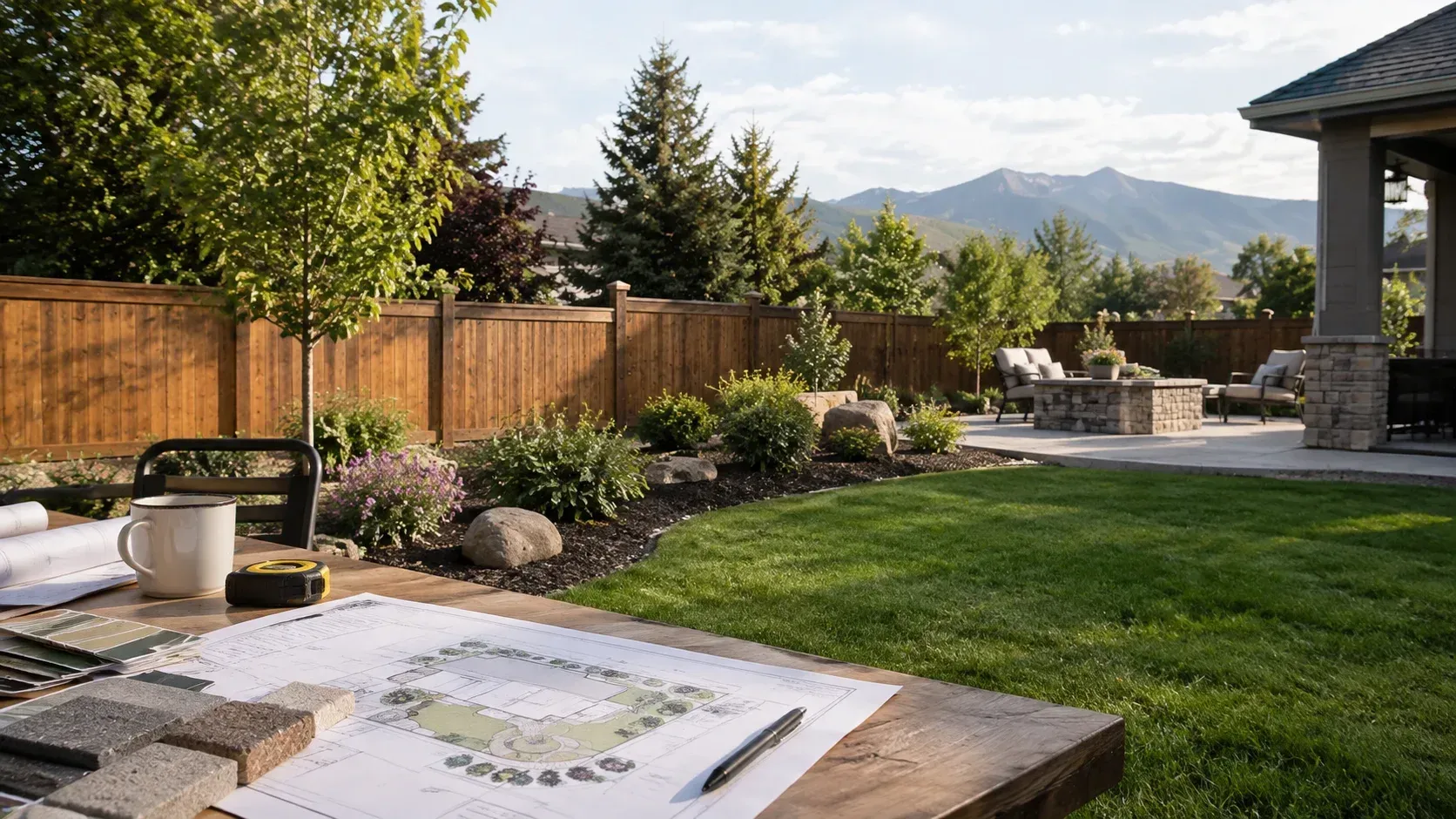
The work is more technical than it looks from the finished surface. A quality patio, for example, depends on a compacted gravel and sand base, proper slope for drainage, and correct edge restraint. When these hidden steps are done well, the surface stays level and stable. When they are skipped, problems show up within a few seasons.
Because much of the real work is buried beneath the visible surface, homeowners often cannot judge quality just by looking at a completed project. That is why the contractor's process, experience, and documentation matter so much during the hiring stage.
The Core Qualifications to Check First
Before comparing designs or prices, confirm the basics. These qualifications separate a legitimate contractor from a risky one.
Licensing. Montana has registration and licensing requirements for construction contractors, and requirements can vary by the type and size of work. You can verify a contractor's registration through the Montana Department of Labor and Industry. Confirming this upfront protects you from unregistered operators.
Insurance. A contractor should carry both general liability insurance and, if they have employees, workers' compensation coverage. Liability insurance protects your property if something is damaged, and workers' comp protects you from liability if a worker is injured on your property. Ask for a certificate of insurance and confirm it is current.
Experience with hardscape installation. General construction experience is not the same as hardscaping experience. Ask specifically how long they have installed patios, walls, and walkways, and request to see completed local projects.
References and reviews. Recent references from comparable projects give you a realistic picture. Online reviews add context, but direct references let you ask specific questions about timelines, communication, and how the contractor handled any problems.
Why Local Experience Matters in the Bitterroot Valley
Local experience is not a marketing detail in Corvallis, it directly affects whether hardscape survives the climate. The Bitterroot Valley goes through repeated freeze and thaw cycles, and these cycles are hard on any outdoor structure.
When water gets into the base beneath a patio or behind a retaining wall and then freezes, it expands and pushes on whatever is around it. Over many winters, poor drainage or an inadequate base leads to heaving, cracking, or settling. A contractor who understands local conditions plans for this from the start.
Soil type also varies across the valley, and it affects how a base should be built and how walls should be reinforced. A contractor familiar with the area is more likely to anticipate these variables rather than discover them mid-project.
For homeowners in nearby communities, working with a team that regularly serves the Hamilton, MT area and surrounding towns often means they already understand the drainage and frost considerations that outside contractors may overlook.
A Practical Framework for Comparing Contractors
When you have two or three candidates, a simple side-by-side comparison helps you weigh more than just price. Use factors that predict long-term quality, not just the bottom-line number.
| Factor | Why it matters | What a strong answer looks like |
|---|---|---|
| Licensing and insurance | Protects you legally and financially | Current registration and a certificate of insurance provided on request |
| Local hardscape experience | Predicts climate-appropriate work | Multiple completed local patios or walls you can view |
| Written estimate detail | Shows thoroughness and honesty | Line items for materials, base, drainage, and labor |
| Base and drainage approach | Prevents the most common failures | Clear explanation of base depth, compaction, and slope |
| Communication | Affects the whole project experience | Prompt, specific answers and a clear point of contact |
| Timeline and scheduling | Sets realistic expectations | An honest start window, not a vague promise |
To apply the framework, weigh the factors that carry the most long-term risk, licensing, insurance, and the base and drainage approach, more heavily than surface-level preferences. A contractor who scores well on the structural factors is usually the safer choice even at a slightly higher price.
Questions Worth Asking Before You Sign
The right questions reveal how a contractor works and thinks. Vague or defensive answers are informative in their own way.
- How will you prepare the base, and how deep will it be for my project?
- How will you handle drainage and slope so water moves away from the patio and my foundation?
- Is the work registered and insured, and can you provide documentation?
- Can I see two or three completed local projects similar to mine?
- What does the written contract include, and what could change the final price?
- Who will be on site, and who is my main point of contact?
- What is your timeline, and how do you handle weather delays?
A contractor who answers these clearly and without pressure is demonstrating the transparency you want. Answers that stay general, or that dismiss your questions about the base and drainage, are a reason to keep looking.
Reading the Estimate and Contract
A written estimate and contract are where a serious contractor separates from a casual one. The document itself is evidence of how the contractor operates.
A thorough estimate breaks out the major cost components rather than giving a single lump sum. Look for line items covering excavation, base materials and depth, the hardscape material itself, drainage, edge restraint, labor, and cleanup. This detail lets you compare bids accurately and understand what you are paying for.
The contract should also state the project scope, the payment schedule, the expected timeline, and how changes to the work will be handled. Large upfront payments before any work begins are a caution sign. Reasonable contracts usually tie payments to milestones.
Keep in mind that this article is general guidance, not legal advice. For a significant project, it is reasonable to review the contract carefully and ask questions about anything that is unclear before signing.
Warning Signs to Take Seriously
Some signals suggest a contractor may be worth avoiding, regardless of how appealing the price is.
A bid that is dramatically lower than others often means something important has been left out, frequently the base preparation or drainage. Cutting those hidden steps lowers the price now and raises the risk of failure later.
Reluctance to provide proof of licensing or insurance is a serious red flag. So is pressure to pay large sums in cash upfront, or resistance to putting the agreement in writing. A contractor who cannot show local, completed work similar to your project may lack the specific hardscaping experience you need.
Finally, poor communication during the quoting stage tends to predict poor communication during the project. If it is hard to get clear answers before any money changes hands, it rarely improves later.
Common Misunderstandings About Hiring
Common belief: The lowest bid saves the most money. What is actually true: The lowest bid sometimes reflects skipped base work or drainage, which can lead to expensive repairs. Why it matters: Judging bids only on price can cost more over the life of the hardscape than choosing a thorough contractor upfront.
Common belief: A good-looking finished project proves quality. What is actually true: The most important work is hidden beneath the surface, so appearance alone does not confirm the base and drainage were done right. Why it matters: A patio can look perfect on day one and still fail within a few years if the foundation was rushed.
Common belief: Any general contractor can handle hardscaping. What is actually true: Hardscape installation is a specialty involving grading, base building, and drainage that not every builder does regularly. Why it matters: Hiring for the specific skill reduces the risk of avoidable structural problems.
What Typical Online Advice Overlooks
Most hiring checklists stop at licensing, insurance, and reviews. Those matter, but a few practical considerations get far less attention and often make the biggest difference.
Drainage planning is frequently treated as an afterthought in generic advice, yet it is one of the leading causes of hardscape failure in cold climates. A contractor's approach to moving water away from structures deserves as much weight as their portfolio.
Project communication and scheduling are also underrated. A skilled contractor who cannot communicate clearly or keep a reasonable schedule can still make a project stressful. How a contractor handles questions before the job is a preview of the working relationship.
Finally, maintenance expectations rarely come up during hiring. Different materials need different upkeep, such as periodic sealing or joint sand replacement. Asking about long-term care before you choose a material helps you plan realistically and avoid surprises after installation.
Conclusion
Choosing a hardscaping contractor in Corvallis comes down to verifying the fundamentals and looking past the price tag. Proper licensing and insurance, genuine local hardscape experience, a detailed written contract, and a clear plan for base preparation and drainage are the factors that most reliably predict lasting work.
Because so much of a hardscape project is hidden beneath the surface, the hiring stage is where you have the most control over the outcome. Taking time to compare candidates, ask specific questions, and read the contract carefully reduces the risk of costly problems later. A contractor who welcomes those questions and answers them clearly is usually the one worth trusting with a long-term investment in your property.
Planning a Hardscape Project in Hamilton, MT? Start With the Right Questions
If you are considering hiring a hardscaping contractor in the Hamilton, MT area, a straightforward conversation about your project, your site conditions, and your goals is a sensible first step. A local team familiar with Bitterroot Valley drainage and frost considerations can help you understand your options and what to expect, with no pressure and no obligation to move forward before you are ready.
Frequently Asked Questions
Do hardscaping contractors need a license in Montana?
Montana has registration and licensing requirements for construction contractors, and what applies can depend on the type and size of the work. You can verify a contractor's registration through the Montana Department of Labor and Industry before hiring.
How do I know if a hardscaping bid is too low?
A bid far below others often means something was left out, commonly base preparation or drainage. Ask each contractor for a line-item estimate so you can compare what is actually included rather than just the total price.
What insurance should a hardscaping contractor carry?
A contractor should carry general liability insurance, and workers' compensation if they have employees. Liability covers property damage, and workers' comp protects you if a worker is injured on your property. Ask for a current certificate of insurance.
Why does local experience matter for hardscaping in Corvallis?
The Bitterroot Valley's freeze and thaw cycles and variable soils affect how hardscape holds up. A contractor familiar with local conditions plans the base and drainage to handle these factors, reducing the risk of heaving, cracking, or settling.
What should a hardscaping contract include?
A solid contract should state the project scope, materials, base and drainage details, payment schedule, timeline, and how changes will be handled. Milestone-based payments are typical, and large upfront cash demands are a caution sign.
Recent Posts