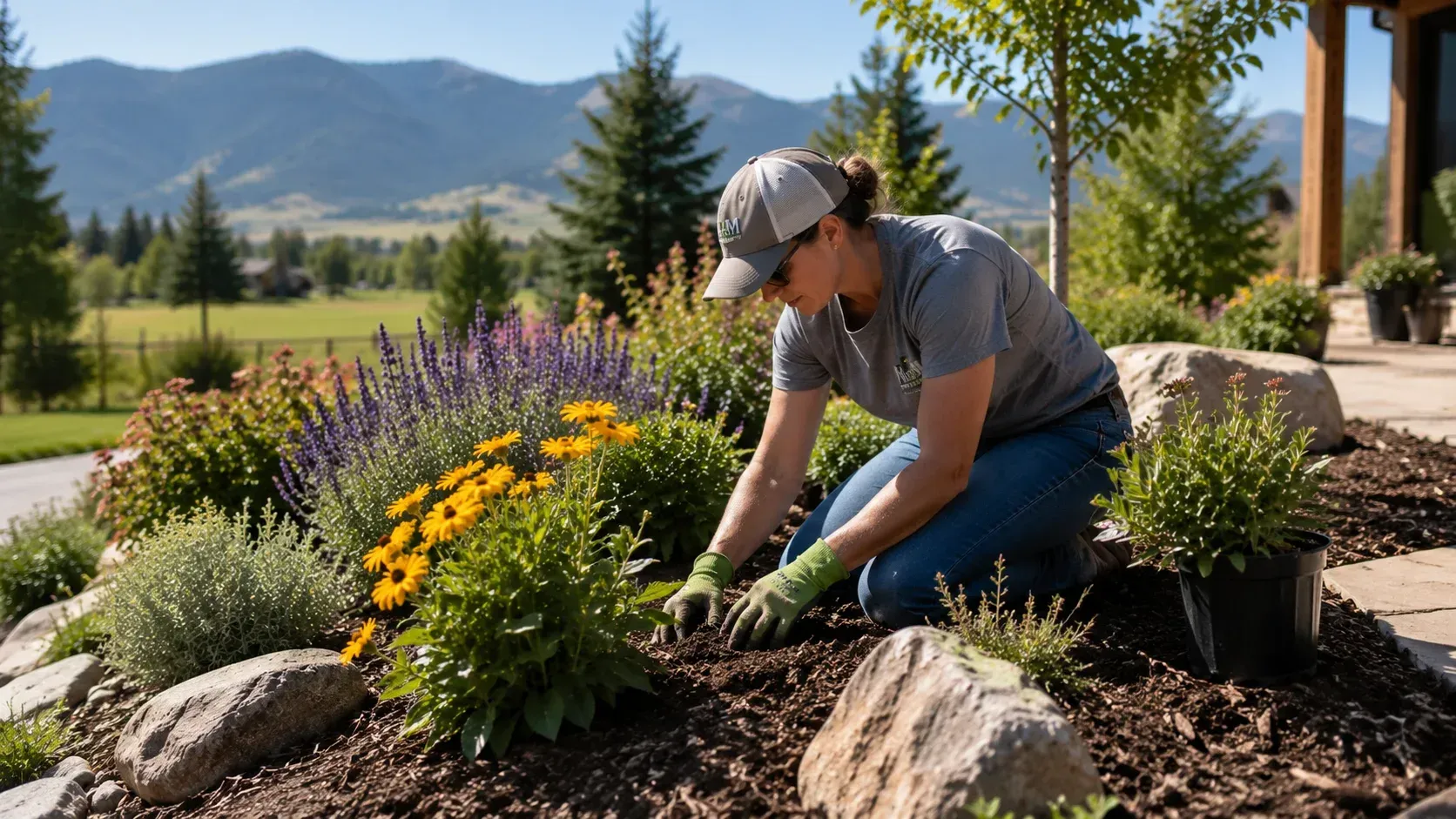
What's the Difference Between Landscaping and Landscape Design?
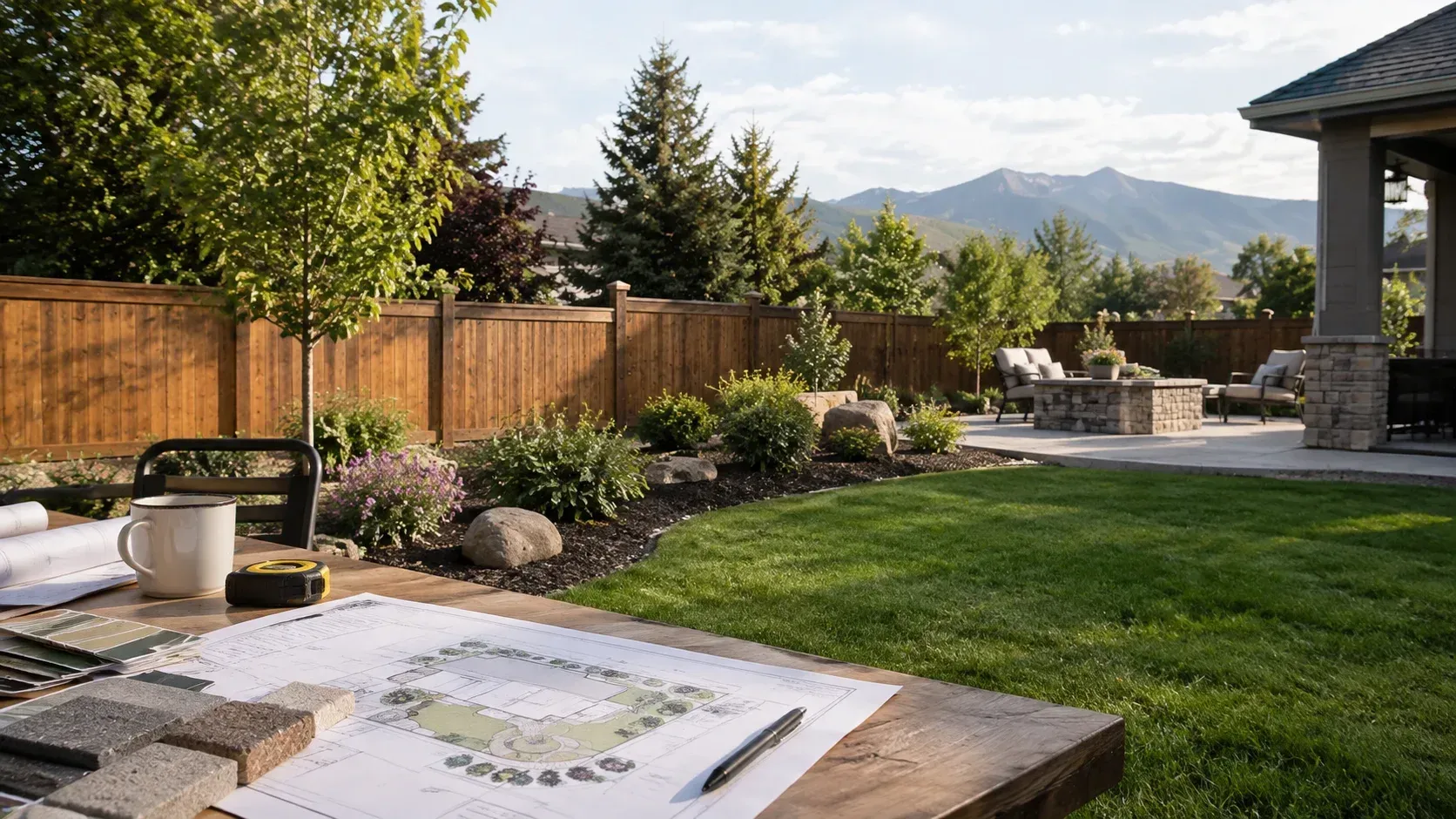
Table of Contents
- Landscaping vs. Landscape Design: The Core Difference
- What Landscape Design Actually Includes
- What Landscaping Work Actually Includes
- Landscaping vs. Landscape Design Side by Side
- Do You Need Landscape Design, or Just Landscaping?
- What It Costs You to Skip the Landscape Design Step
- Who Does the Work: Designer, Landscaping Crew, or Both
- Where Landscape Architects Fit In
- How Design and Landscaping Fit Together on One Project
- Conclusion
- Get a Design Consultation and Free Estimate
- Frequently Asked Questions
Key Takeaways
- Landscape design is planning. Landscaping is building. Design decides what goes where and why; landscaping puts it in the ground.
- Design is not a plant list. It covers planting zones, grading, patio placement, water features, irrigation concepts and lighting layouts, because all of those compete for the same space.
- Small, self-contained jobs rarely need a design phase. Whole-yard projects, sloped lots, drainage problems and phased builds almost always do.
- The expensive mistakes happen when installation runs ahead of planning: plants in the wrong light, patios in the wrong place, irrigation retrofitted into finished beds.
- One company doing both is not a compromise, as long as the design work is real. Ask to see the plan before anyone digs.
Landscaping vs. Landscape Design: The Core Difference
Landscape design is the planning stage, and landscaping is the physical work that carries the plan out. Design decides where things go, how the space flows, and why each decision was made. Landscaping is the grading, planting, building and installing that turns that plan into a finished yard.
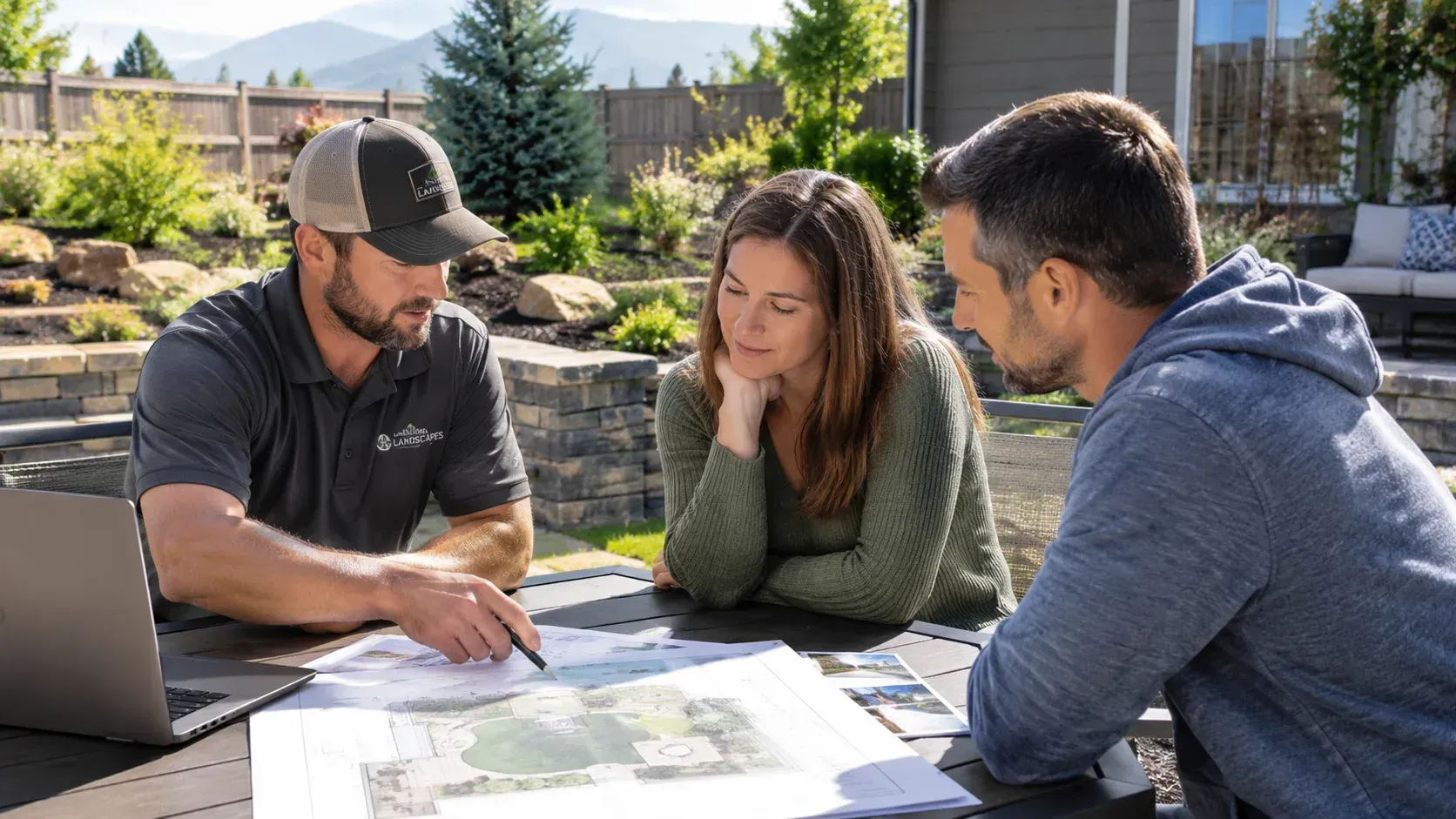
Put simply, design happens on paper and landscaping happens in the dirt. Our landscape design work is about planning the layout, flow and features of your outdoor space before a single shovel hits the ground, while our landscaping work is the installation and enhancement that follows.
The confusion is understandable, because plenty of companies use the words interchangeably and many firms do both. But they are genuinely different activities with different deliverables, and knowing which one you are buying changes the questions you should be asking.
What Landscape Design Actually Includes
The most common misconception we run into is that landscape design means picking plants. It is considerably broader than that.
A design phase typically produces decisions and drawings covering:
- Planting zones, meaning what goes where based on sun exposure, soil and mature plant size rather than what looks good at the nursery
- Grading, or how the ground itself will be shaped, which determines where water goes
- Patio and hardscape placement, including how big and what shape
- Water features, if any
- Irrigation concepts, planned in relation to the planting layout
- Outdoor lighting layouts
- Circulation and flow, meaning how people actually move through the space
- Sightlines and screening, what you want to see and what you want hidden
- Phasing, if the build will happen over multiple seasons
Our own design process runs in three stages. We start by talking through how you actually want to use the space and what you like. Then we evaluate the property's existing conditions, including sun exposure, drainage patterns, soil and existing vegetation. Then we bring you the plan, walk you through it, and make adjustments until it is right. The service includes revisions, and we offer full 3D landscape design planning so you can see the finished yard before construction starts.
That last point is worth dwelling on. A 3D plan is the cheapest possible place to discover you do not like something.
What Landscaping Work Actually Includes
Landscaping is the execution. It is skilled physical work, and the quality of it determines whether a good design survives contact with the ground.
Typical landscaping scope covers:
- Site preparation and clearing
- Soil assessment and improvement, addressing compaction and nutrient problems
- Grading and drainage work
- Plant bed installation
- Planting of trees, shrubs, perennials and grasses
- Lawn renovation, turf improvements, reseeding or full lawn replacement
- Mulching and edging
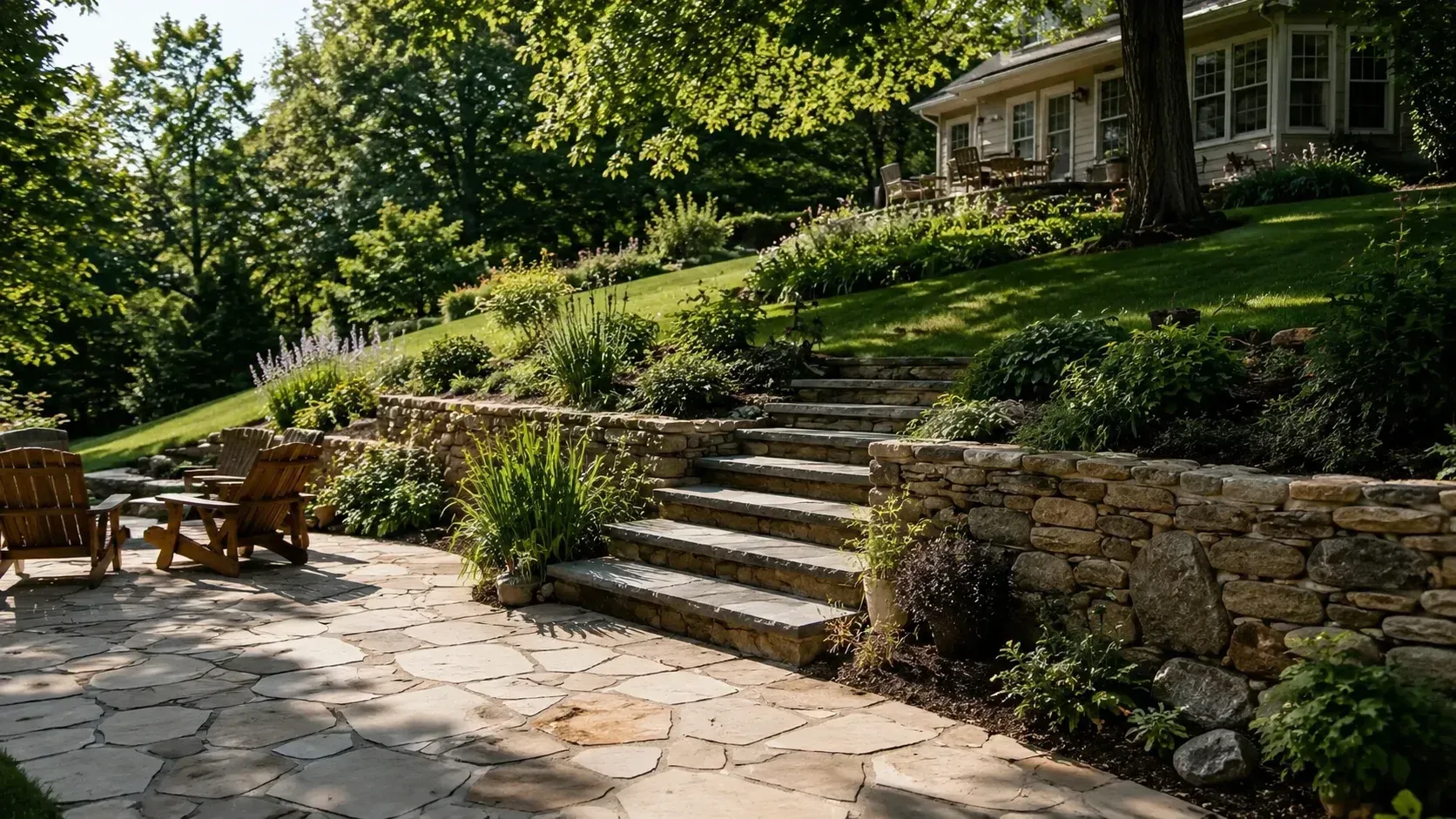
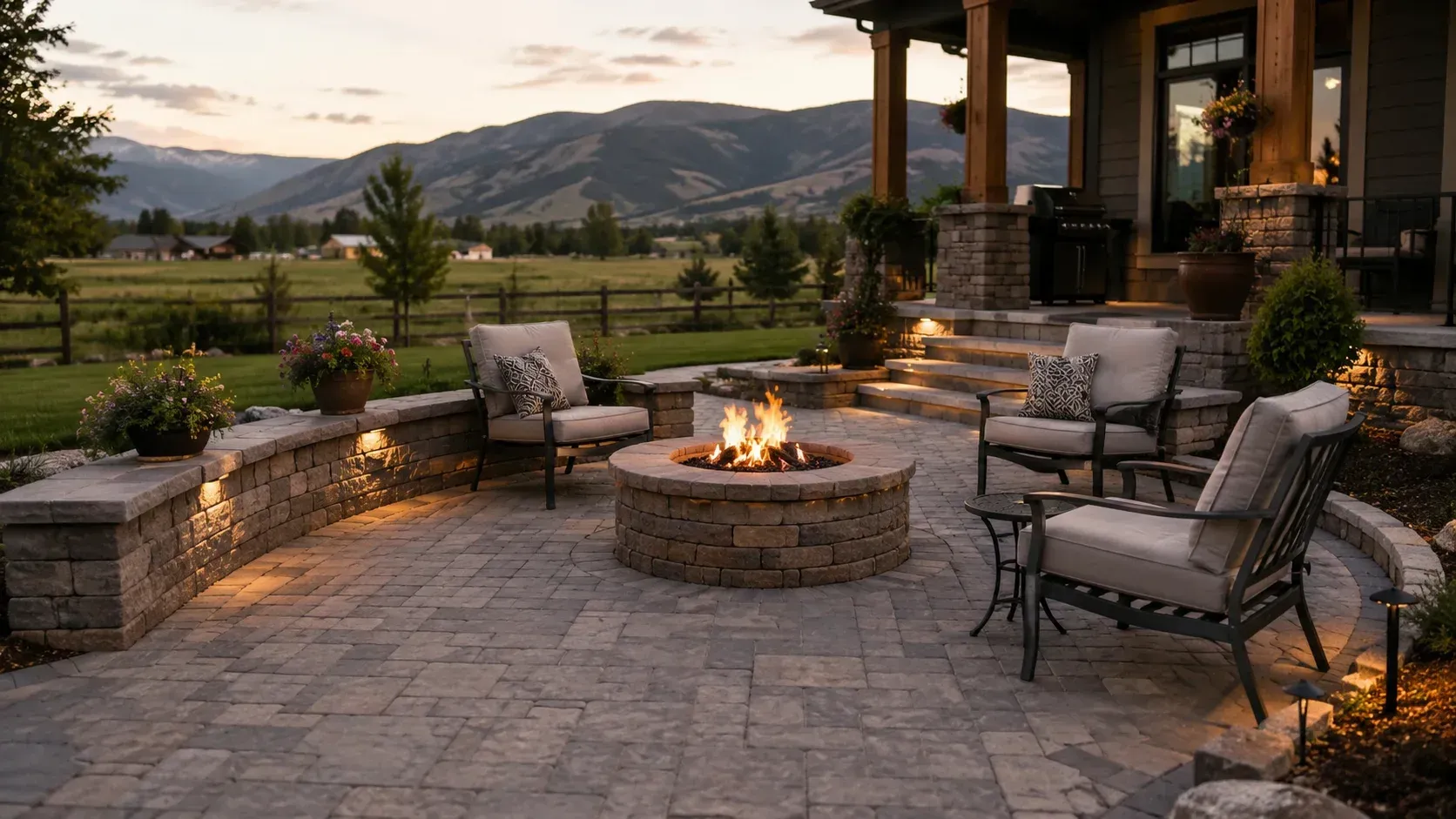
- Hardscape construction, such as patios, walkways, retaining walls and fire pits
- Irrigation and lighting installation
- Cleanup and haul-away
- Ongoing maintenance and seasonal refreshes
If you want the complete breakdown of that scope, we cover it in detail in our article on what's included in a full-service landscaping package.
Notice that plant selection appears in both lists. Design decides which plants and where; landscaping sources and installs them. In the Bitterroot Valley that first decision carries a lot of weight, because our climate and dry summers rule out plenty of popular choices. Our guide to plants that thrive in Bitterroot Valley gardens covers what actually holds up here.
Landscaping vs. Landscape Design Side by Side.
| Full-service package | Separate contractors | |
|---|---|---|
| What it produces | A plan, drawings, a 3D visualization | A finished, installed yard |
| When it happens | Before any work begins | After the plan is settled |
| Main skill | Spatial planning, horticultural knowledge, site analysis | Construction, horticulture, equipment operation |
| What you receive | Documents you own and can build from | Physical work on your property |
| Typical cost basis | Design fee, sometimes credited toward installation | Materials plus labour |
| Can be bought alone | Yes | Yes |
| Changes are cheap | Yes, on paper | No, once built |
That final row is the whole argument for design. Moving a patio on a drawing costs a conversation. Moving a built patio costs the patio.
Do You Need Landscape Design, or Just Landscaping?
Not every project needs a design phase, and we will tell you when yours does not.
You probably just need landscaping if the job is small and self-contained, such as replacing a failed bed, reseeding a lawn, adding mulch and edging, installing a short walkway on flat ground, or ongoing maintenance of an existing landscape. The layout is already decided, and adding a design phase adds cost without adding much.
You probably need design first if you are doing the whole yard or a large portion of it, the property is sloped, you have drainage or erosion problems, you are combining planting with hardscaping, you plan to build in phases across several seasons, you are starting from bare ground on new construction, nothing has ever grown well in a particular area, or you have tried piecemeal improvements and the yard still does not feel coherent.
Sloped lots deserve a specific mention because the valley has so many of them, and slope changes nearly every decision in a yard. We have written separately about designing landscaping around a sloped property if that is your situation.
The phased-build case is the strongest argument for design, and it is the one homeowners most often miss. If you intend to spread work across three years, a plan is what makes year three fit year one. Without it, each season's work gets decided in isolation and you end up undoing things you already paid for.
What It Costs You to Skip the Landscape Design Step
These are the specific failures we get called in to fix, and all of them trace back to installing before planning:
- Plants in the wrong light. Shade plants baking on a south wall, sun plants struggling under a tree. This is the most common and the most avoidable.
- Plants sized for delivery day rather than maturity. A shrub that looked right against the house becomes a problem in year six.
- Patios in the wrong place, catching afternoon sun when you wanted evening shade, or sized for a table that does not actually fit.
- Drainage discovered after planting. Water finds the low spot, and the low spot is now a finished bed.
- Irrigation retrofitted into established beds, which means cutting into work you just paid for.
- Lighting added years later, meaning trenching through planted ground.
- Beds and hardscape that fight each other, because each was decided without reference to the other.
- A yard that is a collection of projects rather than a place. This one is hard to articulate and easy to feel.
None of these are exotic. They are the ordinary result of making spatial decisions one at a time.
Who Does the Work: Designer, Landscaping Crew, or Both
There are three common arrangements, and each is legitimate.
An independent designer, then a separate installer. You buy a plan, own it, and take it to bid. This gives you pricing leverage and a designer with no stake in what gets installed. It also means you coordinate the handoff, and any gap between plan and buildability is yours to resolve.
One company doing both. The design and installation sit under one roof, so the plan is drawn by people who know what they can build and what it will cost. Accountability is single-source. The caveat is that the design work has to be real rather than a sketch used to sell installation.
A landscaping crew handling design informally. Sometimes appropriate on simple jobs. On a whole-yard project it is where the failures above tend to originate.
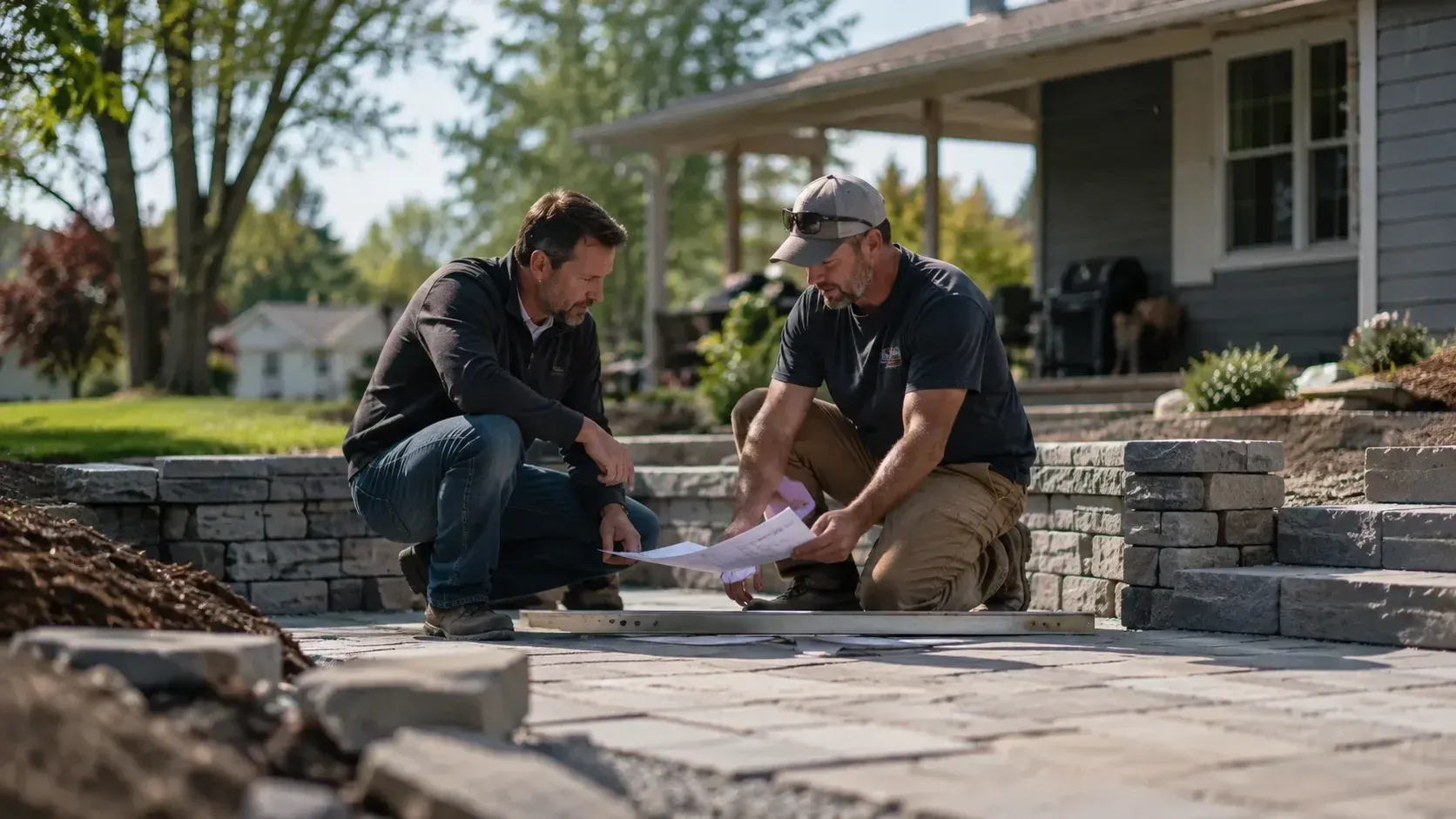
If you are hiring one company for both, the questions worth asking are simple: will I receive an actual plan before work starts, can I see examples of designs you have drawn and built, does the design include revisions, and do I own the plan. Our gallery exists partly for that reason. Being able to see designed and installed work together is the most useful evidence there is.
The same vetting logic applies to hardscape work specifically, which we covered in our article on what to look for when hiring a hardscaping contractor.
Where Landscape Architects Fit In
There is a third term that belongs in this conversation. Landscape architect is a professionally licensed title, distinct from landscape designer, and the licensing requirements are set by each state.
In broad terms, landscape architects are typically engaged on larger, more technical or public and commercial projects, and on work involving significant structural engineering, stormwater systems or regulatory review. Residential landscape designers work on homes and gardens.
For most residential projects in the valley, a landscape designer working with a capable installation crew is the right fit. If your project involves substantial structural retaining walls, complex stormwater management, or anything requiring engineered drawings for permitting, that is the point to ask whether a landscape architect or engineer should be involved. We will say so if we think your project has reached that threshold.
How Design and Landscaping Fit Together on One Project
On a typical whole-yard project the sequence runs like this:
- Consultation. What you want, how you use the space, what you like, and your budget.
- Site analysis. Sun exposure, drainage, soil, existing vegetation, slope.
- Design. The plan, presented and walked through, with revisions until it is right.
- Scope and estimate, built from the finished plan so the number reflects something real.
- Site preparation, clearing, soil work, grading and drainage.
- Hardscape construction, since it is heavy work and sets the structure.
- Planting and lawn.
- Irrigation and lighting, ideally installed while the ground is still open.
- Mulch, edging and cleanup.
- Maintenance, which is what keeps the design looking like the design.
The order matters more than most homeowners expect. Grading before planting, hardscape base before pavers, irrigation before turf. When that order breaks, work gets redone.
Conclusion
Landscape design is the plan and landscaping is the build. Design decides what goes where and why, covering planting zones, grading, hardscape placement, irrigation and lighting all in one view. Landscaping is the skilled physical work that makes it real.
Small, contained jobs can skip straight to the work. Whole-yard projects, sloped lots, drainage problems and anything built in phases benefit from a plan first, because changes are nearly free on paper and expensive in the ground.
Get a Design Consultation and Free Estimate
If you are not sure whether your project needs a design phase, that is a reasonable question to ask us directly. We will look at the property and tell you honestly, including when the answer is that you can skip straight to the work.
Legacy Landscapes has been working in the Bitterroot Valley for more than 25 years, and we offer personalized design consultations and free estimates. Our design service includes full 3D planning and revisions, so you see the finished yard before anything gets built.
We serve Hamilton, Corvallis, Victor, Darby and Stevensville across the Bitterroot Valley. Call
(406) 540-0117 or reach us through the contact page.
Frequently Asked Questions
Can I get landscape design without hiring the same company to install it?
Yes. Design can be purchased on its own, and you own the resulting plan. Ask upfront whether a design fee is credited toward installation if you do proceed with the same company, since policies vary.
Is landscape design worth paying for on a small project?
Usually not, if the project is self-contained and the layout is already obvious, such as replacing a single bed or reseeding a lawn. Design earns its cost on whole-yard work, sloped lots, drainage problems and phased builds.
What is the difference between a landscape designer and a landscape architect?
Landscape architect is a licensed professional title with state-set requirements, and architects typically handle larger, more technical, commercial or engineered projects. Landscape designers focus on residential gardens and outdoor living spaces.
Do I get drawings I can keep?
You should. A design phase produces a plan as its deliverable, and ours includes 3D visualization plus revisions. Confirm in writing what documents you receive and whether you own them before you commission any design work.
Does design have to be finished before landscaping starts?
For anything involving grading, drainage or hardscaping, yes. Those decisions determine everything installed on top of them. Planting refinements and lighting can be adjusted later, but the structural layout should be settled first.
Recent Posts